

If you do not want to go to the gym, you can exercise outside in the fresh air. Traditionally, activities like running or cycling are suitable for this setting. If you are going to start running, you must listen to your body and find your rhythm. Anything else usually develops over time.
The majority of the movements in this street workout are performed with your body weight and involve the use of pull-up bars or parallel bars. These can be seen in so-called calisthenics parks in almost every big city. A variety of activities can also be done inside your own four walls. This can be high-intensity interval exercise (HIIT), but quieter sports like yoga or Pilates can also be done at home.
How can I stay fit without going to a gym?
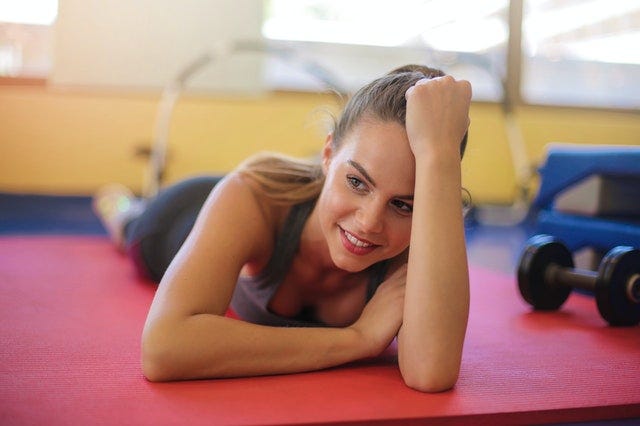
No matter how hard you try, no sport in the world can provide results if you do not persevere. Create a workout regimen that you can commit to for an extended period. If you have to torture yourself to exercise daily, you will eventually lose inspiration. So, pick sports that are both healthy for you and enjoy. A daily running buddy, for example, will assist you with staying on track.
Overexertion is a common rookie mistake: they practice too fast and too hard before they run out of power. As a result, it is preferable to choose mild preparation that is done daily and for a long period. But you prep not only for a beach body in the summer but also for a safe and solid body in old age.
Effective Tools for your Home Exercise Routine
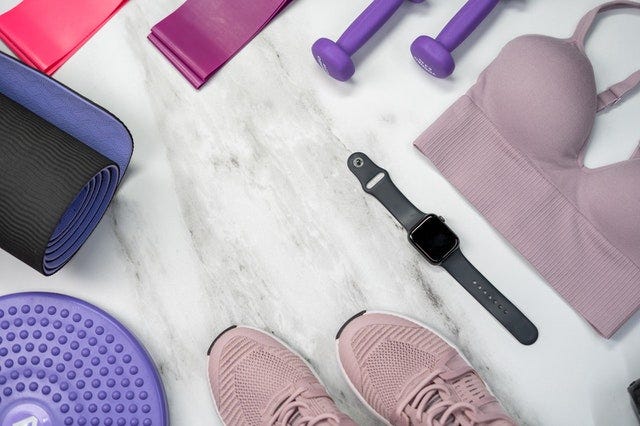
Different accessories are needed depending on the sport you have chosen. Breathable sportswear and high-quality sports shoes, on the other hand, are the foundation of every exercise. Since these are not inexpensive, you can take good care of them. You can wash your shoes in the laundry machine, but there are certain precautions you can take.
I will show you the best alternatives to your beloved workout facilities whether you choose to set up your own exercise space or are hunting for basic devices for the living room. In addition, what about when the weather is nice? Simply pair a jogging session with a few sharp resistance units. There are guidelines for both large and small spaces, as well as for indoor and outdoor exercise.
1. Abdominal exercise

Crunches on the abdominal press in the gym are especially taxing on the straight abdominal muscles. The device’s unique feature is that, unlike traditional crunches on the mat, an individual training weight can be set here. The same can be said for the Ab-Coaster, which can be used for both oblique and straight abdominal muscles in the studio. Since the strength is determined by factors other than body weight, both beginners and experienced users get their money’s worth.
Crunches can be difficult, particularly for beginners. A crunch assist is therefore a tremendous help when exercising in the home gym. The unit provides movement assistance, supports the back, and relieves neck pain.
Classic strength training with weights is unquestionably more effective for muscle building. Power training without supplies, on the other hand, will help you lose weight and define your muscles quickly.
With a negative bank, advanced students can maximize their six-pack. In comparison to crunch machines and floor drills, your knees hang higher than your shoulders on this incline seat, providing an additional workout for your abdominal muscles. The workout can be made more powerful by adjusting the incline and, if desired, by adding weights.
Alternatively, you should hang from a pull-up bar with straight arms and raise your legs straight legs to make your abdominal muscles burn. You should also perform the “Toes to Bar” exercise for an extra kick: keep the toes hitting the bar. Swinging from the hip is permitted here.
2. Leg workouts

In the gym, the leg press is an excellent workout for the elbows, calves, and buttocks. You may adjust the pressure in the studio with various weights and therefore increase continuously. The adductor or abductor machine is often used to strengthen the inside and outside of the thighs. The muscles are exercised in isolation by coordinated spreading or squeezing of the thighs on the machine.
A step board of adjustable height is suitable for leaping or stair exercises. Step drills (as used in aerobics classes) work the whole leg muscles and can be used as a warm-up workout as well as sweaty strength training. On the moving platform, try lifted lungs or one-legged squats. Raise your calves on the stepper to strengthen your lower legs. You will increase the force by adding weights.
Balance boards or half an exercise ball are excellent for squats, lunges, and even the one-legged stance. Not only do the legs and bottom work here, but so do the core muscles, which maintain the necessary balance. Practical: The balancing tools can also be used for assistance drills.
Flexible fitness bands are an absolute must-have for your home leg workouts. Stretch your resistance loop just above the knee on the thigh for extra intense adductor and abductor squats and move the knees in the bend alternately from the inside out.
3. Butt/Behind Exercise

There is no other movement that forms the buttocks as well as squats. A squat rack in the gym is ideal for fitness support. The movement of the barbell while squatting is directed by a rail; at the same time, the weight may be placed at various heights. Weight plates should be attached to the barbell to achieve the desired level of strength.
Kickbacks on the cable pull are another excellent glute separation practice. An ankle cuff binds the leg to the towing tower. The leg and the fixed weight are lifted up as far as possible using the gluteal muscle’s power.
If you have enough room for weights, a kettlebell will make your bottom shine. With the weight in your hands, you can, for example, strengthen sumo squats or use the kettle swing to sweat your whole body.
4. Chest Exercise
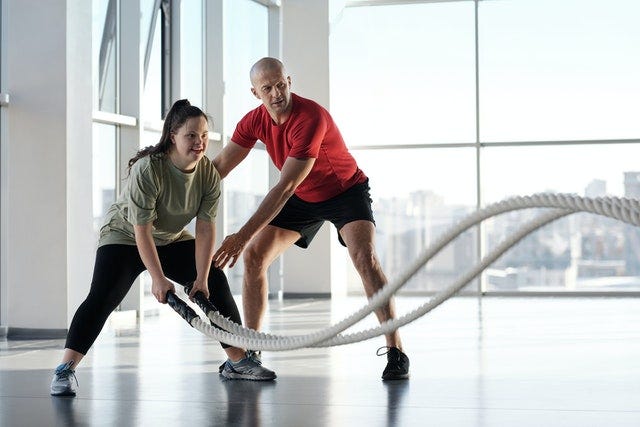
Strong chest muscles are particularly appealing to male fitness enthusiasts. Targeted drills, such as the chest press, are especially useful in the gym for targeting muscle groups and building stamina.
To do this, the machine’s side handles are pulled forward while sitting out of the curve of the arm until the limbs are extended. In comparison to the traditional barbell bench press, the movement is driven even further by the system, which is beneficial to beginners in particular. For Butterflies, the action is more focused on pressing the arms together. Aside from the chest muscles, the front shoulder is also worked on.
5. Back and shoulder Exercise

Shoulder and back strengthening is important for good core muscles and a stable back. You have a favorite piece of workout equipment: Depending on the target strength, you will exercise your lower back on the hyperextension machinehyperextension machine with or without additional weight. The back extensor muscles are especially tense, but the gluteal muscles are also strained. On the cable pull, a wide bar is pushed to the chest or neck for the lat pulldown. This efficient workout focuses on the upper back and shoulder muscles.
The rowing machine provides the ideal full-body exercise, which is particularly effective at avoiding back issues at work and in daily life. It’s no surprise that the exercise activates all of the spine’s supportive muscles. You should work out on the rowing machine with heavyweights to create muscle or use the rowing ergometer to lose calories when strengthening your back.
Because of the subtle vibrations, it is not only ideal for shoulder and back exercise, but for the entire deep muscles: The Flexi-Bar is a kind of bar. Hold the vibrating rod horizontally with your arms outstretched and start him going with quick shoulder motions. Keep and swing it vertically in one hand next to the body to work the lateral back muscles.
If you do not want to invest in a home rowing machine or lat pulldown machine, you can replicate the action using dumbbells. Dumbbells can be used for a variety of exercises, including one-armed indoor rowing on a flat bench and shoulder presses when seated. Kettlebells, on the other hand, are ideal for this situation.
6. Arm Exercise

You normally cannot get past the dumbbell area in the gym if you want set muscles. However, some machines have excellent solutions for arm muscle conditioning. Curls, for example, are a great way to work on your biceps in the gym. The triceps are your adversary: on the cable pull, you can practice the back of your arm with different grips or attempt dips. Many studios have a dip unit, which is ideal for beginners. The added weight on the unit provides encouragement and simplifies the workout.
Dumbbells are a must-have for any arm workout. Dumbbells are ideal for arm muscle development because they allow you to change the weight flexibly. Add hammer curls to the routine for variety, or use the barbell for various grip techniques.
Body tubes with handles are suitable for biceps and triceps workouts. Lunge with your front foot on the elastic band’s middle. Grab the handles with both hands and twist the biceps. Loop the body tube around a high bar or door for triceps exercises. You can also use the Theraband here.
Conclusion
If you do not consistently challenge and promote the muscles by focused strength exercise, your body can begin to lose muscle mass about the age of 25. There is no reason to join a gym or purchase a whole set of equipment. The simplest and fastest way to gain muscle: What you need to do is purchase a mat and exercise with your own body weight. Many who only exercise with their own body weight must be creative in order to continuously provide new stimulation to the muscles.